Tuesday, April 7, 2015

Lafcadio


Fantasy is my favorite genre of children's books.  Galda, Cullinan, & Sipe (2010) explain that good fantasy books should be believable and consistent, with clearly defined conflict and strong characterization (p. 24).  "Lafcadio", by Shel Silverstein, is definitely one of those "good" fantasy books!


This book is extremely entertaining to read.  It is written from the perspective of "Uncle Shelby", who is speaking to the reader as an old dear friend or family member.  The story is about a lion who was not afraid of the hunters who came to shoot at him.  After an interaction with a hunter, Lafcadio took the hunter's gun and began practicing with it.  He became a pretty expert shot.  He defended his fellow lions from future hunters until one day, a man came to invite him to join human civilization and become part of a circus. The story tells of Lafcadio becoming part of the human world and then later returning home to the jungle.  
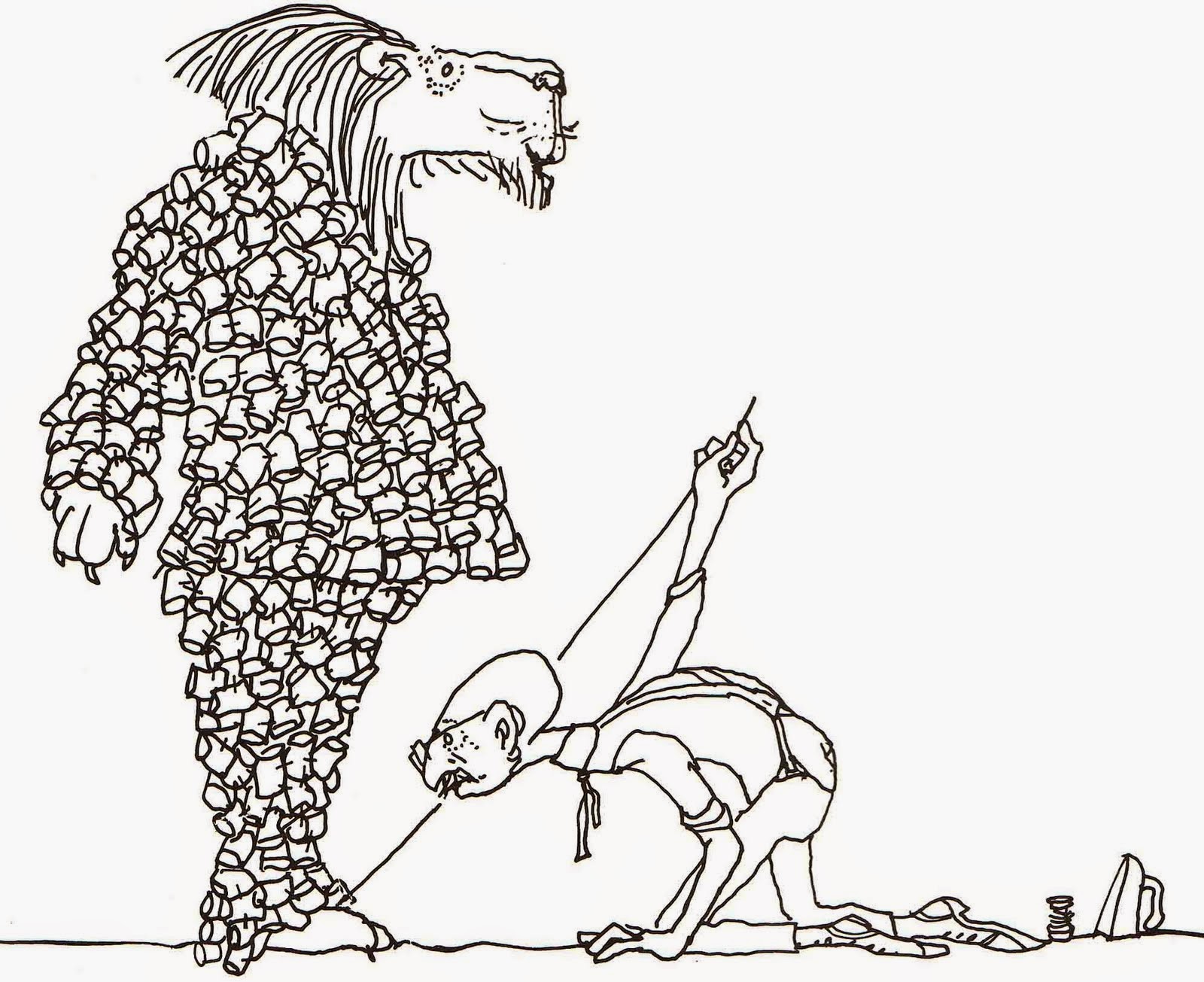
Shel Silverstein uses these adorable cartoons to illustrate his book.  All of these cartoons are colorless, but not emotionless.  They give a light fun feel to the text, which is also an entertaining journey with the storyteller.  These pictures expand on the story properly, not merely duplicating what is described in the text (Galda, Cullinan, & Sipe, 2010).  

Reader Response Questions:
1. If you were Lafcadio, would you have stayed in the jungle or gone to join the circus as he did?
2. He loved marshmallows! What new or exciting things would you want to try from the human world if you were a lion?
3. At the end of the story Lafcadio gets bored with his fame and fortune.  Why do you think that is?

Motivational Activities:
1. In the conclusion of the story we read about how Lafcadio has forgotten who he is and where he came from.  What are some things that you can do to help you remember where you came from as you travel your different journeys in life?  Write about your ideas.
2. In the story we read about how Lafcadio practiced and practiced each day so that he could become really expert at firing a gun.  Why is practice important?  Write about some things you would like to become expert at and how you think practicing could help you accomplish your goals.


I love Shel Silverstein books.  They are all engaging to young people and usually filled with poetry and laughter.  The stories, like this one, usually have a deeper meaning.  This makes his writings relatable to adults as well as children.

References
Galda, L., Cullinan, B., & Sipe, L. (2010). Literature and the 
     child (7th ed.). Belmont, CA: Cengage Learning.
Silverstein, S. (1963) Lafcadio: The lion who shot back. New
     York: Harper & Row.


Are Haunted Houses Real?

Children love mysteries.  There's nothing more mysterious than a haunted house!  "Are Haunted Houses Real?", by Patrick Perish, helps the wondering young mind answer some questions about haunted houses.  It explains why some people may think a house is haunted.  It discusses some famous haunted houses, and tells of some haunted houses that aren't really haunted.  
                                                                        
 This children's nonfiction book is colorful and engaging.  There are key words throughout the text which are written in a different color than the other text, and listed in a glossary in the back of the book so that children can better understand the possibly unfamiliar words.  The text and illustrations all appear accurate.  The pictures of historical haunted houses give children a better understanding of the information in the text.  There are references in the back of the book for more reading on the topic, as well as some fun websites to further engage children on the subject.


Response Questions:
1. What would you do if you thought your house was haunted?
2. How could you tell if you were in a haunted house?
3. If you were trying to make a haunted house, what things would you be sure to include?


I think this is a great book! My daughter actually brought this one home from her school library and I thought it was perfect for this assignment. She has read it several times and doesn't seem to tire of it.  I also love that it gives information but has not scared her in any way.  It is a non-frightening resource for something that children may find scary as well as mysterious.  

References
Galda, L., Cullinan, B., & Sipe, L. (2010). Literature and the  
         child (2nd ed.). Belmont, CA: Cengage Learning. 
Perish, P. (2014) Are haunted houses real?  Mankato, MN: 
        Amicus

Sunday, March 15, 2015

No Mirrors In My Nana's House

No Mirrors In My Nana's House

Imagine yourself as a little child. Who was it that told you who you were or what your value was?  We look to those around us for identity, acceptance, love, and support.  No Mirrors In My Nana's House is about a little girl who does not look at a mirror to find her identity, but to the loving eyes of her Nana.  
      Her Nana's love allowed her to be blind to the poverty that she lived in.  She was filled with wonder by cracked walls, embraced the garbage strewn floors, and enjoyed her clothes that were probably hand-me-downs and didn't fit well.    
    This book is a multicultural book for children 5+, and would fall under the Biography/Memoir genre, as the writings are authentic and the representations of life are very vivid (Galda, Cullinan, & Sipe, 2010, p.12).  This story depicts a time and feeling in a little child's life.  


The bright and colorful illustrations bring an additional depth to this story.  There are no faces on the characters in the illustrations.  The blocks of color and shapes of the people display a colorful beauty that is not defined by specific features, but as the book teaches, by what they are intrinsically.


Discussion Questions:

1. What do you think she saw about herself in her Nana's eyes?

2.  Why do you think her Nana decided not to put mirrors in her house?

3. What would you see in the eyes of those in your home if you didn't have mirrors?


Motivational Activities:

1. Draw pictures of your family and describe what you see through your eyes as mirrors of them.

2. Write about what you think others see when they see you.  Include at least 3 of your best qualities and characteristics, and 1 thing that you see that you can do or change to be a better person, student, or child.  


Reference

Barnwell, Y. (2005). No mirrors in my nana's house. New York, NY:HMH Books for Young 
      Readers.

Galda, L., Cullinan, B., & Sipe, L. (2010). Literature and the child (7th ed.). Belmont, CA: 
      Cengage Learning.